

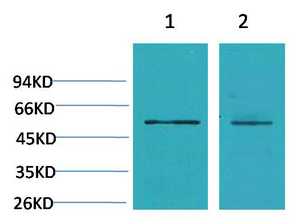
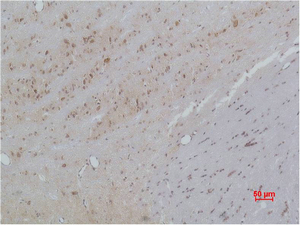
Main InformationTargetCACNB3Host SpeciesRabbitReactivityMouse, RatApplicationsWB, IHC, IFMW50kD (Observed)Conjugate/ModificationUnmodifiedDetailed InformationRecommended Dilution RatioWB 1:500-1000; IHC 1:200-500; IF 1:50-200FormulationPBS, pH 7.4, containing 0.5%BSA, 0.02% sodium azide as Preservative and 50% Glycerol.SpecificityThe antibody detects endogenous CACNB3 protein.PurificationThe antibody was affinity-purified from rabbit antiserum by affinity-chromatography using epitope-specific immunogen.Storage-15°C to -25°C/1 year(Do not lower than -25°C)MW(Observed)50kDModificationUnmodifiedClonalityPolyclonalIsotypeIgGAntigen&Target InformationImmunogen:Synthetic Peptide of CACNB3Specificity:The antibody detects endogenous CACNB3 protein.Gene Name:CACNB3Protein Name:Voltage-dependent L-type calcium channel subunit beta-3Other Name:CACNB3 ; CACNLB3 ; Voltage-dependent L-type calcium channel subunit beta-3 ; CAB3 ; Calcium channel voltage-dependent subunit beta 3Background:This gene encodes a regulatory beta subunit of the voltage-dependent calcium channel. Beta subunits are composed of five domains, which contribute to the regulation of surface expression and gating of calcium channels and may also play a role in the regulation of transcription factors and calcium transport. [provided by RefSeq, Oct 2011],Function:Function:The beta subunit of voltage-dependent calcium channels contributes to the function of the calcium channel by increasing peak calcium current, shifting the voltage dependencies of activation and inactivation, modulating G protein inhibition and controlling the alpha-1 subunit membrane targeting.,similarity:Belongs to the calcium channel beta subunit family.,similarity:Contains 1 SH3 domain.,subunit:The L-type calcium channel is composed of four subunits: alpha-1, alpha-2, beta and gamma. Interacts with CACNA2D4.,tissue specificity:Expressed mostly in brain, smooth muscle and ovary.,Cellular Localization:Cytoplasm .Tissue Expression:Expressed mostly in brain, colon and ovary.Research Areas:>>MAPK signaling pathway ; >>Cardiac muscle contraction ; >>Adrenergic signaling in cardiomyocytes ; >>Oxytocin signaling pathway ; >>Hypertrophic cardiomyopathy ; >>Arrhythmogenic right ventricular cardiomyopathy ; >>Dilated cardiomyopathy
商品信息已成功复制,启研竭诚为您服务


