

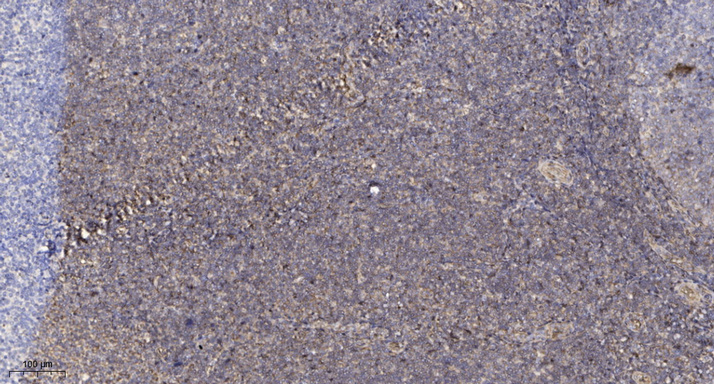
Main InformationTargetCOX82Host SpeciesRabbitReactivityHuman, Rat, Mouse,ApplicationsIHC, ELISAConjugate/ModificationUnmodifiedDetailed InformationRecommended Dilution RatioIHC 1:50-200; ELISA(peptide)1:5000-20000FormulationLiquid in PBS containing 50% glycerol, 0.5% BSA and 0.02% sodium azide.SpecificityThis antibody detects endogenous levels of human COX82PurificationThe antibody was affinity-purified from rabbit antiserum by affinity-chromatography using epitope-specific immunogen.Storage-15°C to -25°C/1 year(Do not lower than -25°C)Concentration1 mg/mlModificationUnmodifiedClonalityPolyclonalIsotypeIgGAntigen&Target InformationImmunogen:Synthesized peptide derived from human COX82 AA range: 10-90Specificity:This antibody detects endogenous levels of human COX82Gene Name:COX8A COX8 COX8LProtein Name:COX82Other Name:Cytochrome c oxidase subunit 8A, mitochondrial ; Cytochrome c oxidase polypeptide VIII-liver/heart ; Cytochrome c oxidase subunit 8-2 ;Background:The protein encoded by this gene is the terminal enzyme of the respiratory chain, coupling the transfer of electrons from cytochrome c to molecular oxygen, with the concomitant production of a proton electrochemical gradient across the inner mitochondrial membrane. In addition to 3 mitochondrially encoded subunits, which perform the catalytic function, the eukaryotic enzyme contains nuclear-encoded smaller subunits, ranging in number from 4 in some organisms to 10 in mammals. It has been proposed that nuclear-encoded subunits may be involved in the modulation of the catalytic function. This gene encodes one of the nuclear-encoded subunits. [provided by RefSeq, Jul 2008],Function:Function:This protein is one of the nuclear-coded polypeptide chains of cytochrome c oxidase, the terminal oxidase in mitochondrial electron transport.,similarity:Belongs to the cytochrome c oxidase VIII family.,Cellular Localization:Mitochondrion inner membrane ; Single-pass membrane protein .Tissue Expression:Widely expressed.Research Areas:>>Oxidative phosphorylation ; >>Metabolic pathways ; >>Cardiac muscle contraction ; >>Thermogenesis ; >>Non-alcoholic fatty liver disease ; >>Alzheimer disease ; >>Parkinson disease ; >>Amyotrophic lateral sclerosis ; >>Huntington disease ; >>Prion disease ; >>Pathways of neurodegeneration - multiple diseases ; >>Chemical carcinogenesis - reactive oxygen species ; >>Diabetic cardiomyopathy
商品信息已成功复制,启研竭诚为您服务


