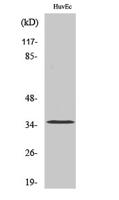


Main InformationTargetHSP70Host SpeciesMouseReactivityHuman, Mouse, RatApplicationsWB, IHC, IFMW70kD (Observed)Conjugate/ModificationUnmodifiedDetailed InformationRecommended Dilution RatioWB 1:1000-2000; IF 1:100-200; IHC 1:50-300FormulationPBS, pH 7.4, containing 0.5%BSA, 0.02% sodium azide as Preservative and 50% Glycerol.SpecificityThe antibody detects endogenous HSP70 proteins.PurificationThe antibody was affinity-purified from mouse ascites by affinity-chromatography using specific immunogen.Storage-15°C to -25°C/1 year(Do not lower than -25°C)MW(Observed)70kDModificationUnmodifiedClonalityMonoclonalClone Number3G10Antigen&Target InformationImmunogen:Human protein HSP70 at C-terminalSpecificity:The antibody detects endogenous HSP70 proteins.Gene Name:HSPA1A;HSPA1BProtein Name:Heat shock 70 kDa protein 1A/1BOther Name:HSPA1A ; HSPA1 ; HSPA1B ; Heat shock 70 kDa protein 1A/1B ; Heat shock 70 kDa protein 1/2 ; HSP70-1/HSP70-2 ; HSP70.1/HSP70.2Background:This intronless gene encodes a 70kDa heat shock protein which is a member of the heat shock protein 70 family. In conjuction with other heat shock proteins, this protein stabilizes existing proteins against aggregation and mediates the folding of newly translated proteins in the cytosol and in organelles. It is also involved in the ubiquitin-proteasome pathway through interaction with the AU-rich element RNA-binding protein 1. The gene is located in the major histocompatibility complex class III region, in a cluster with two closely related genes which encode similar proteins. [provided by RefSeq, Jul 2008],Function:Function:In cooperation with other chaperones, Hsp70s stabilize preexistent proteins against aggregation and mediate the folding of newly translated polypeptides in the cytosol as well as within organelles. These chaperones participate in all these processes through their ability to recognize nonnative conformations of other proteins. They bind extended peptide segments with a net hydrophobic character exposed by polypeptides during translation and membrane translocation, or following stress-induced damage. In case of rotavirus A infection, serves as a post-attachment receptor for the virus to facilitate entry into the cell.,induction:By heat shock.,similarity:Belongs to the heat shock protein 70 family.,subunit:HSPA1B is found in a sperm-specific complex with CATSPER1 and CATSPERB (By similarity). Interacts with TSC2. Interacts with IRAK1BP1.,tissue specificity:HSPA1B is testis-specific.,Cellular Localization:Cytoplasm . Nucleus . Cytoplasm, cytoskeleton, microtubule organizing center, centrosome . Secreted . Localized in cytoplasmic mRNP granules containing untranslated mRNAs.Tissue Expression:Brain,Cajal-Retzius cell,Embryonic kidney,Epithelium,FetalResearch Areas:>>Spliceosome ; >>MAPK signaling pathway ; >>Protein processing in endoplasmic reticulum ; >>Endocytosis ; >>Longevity regulating pathway - multiple species ; >>Antigen processing and presentation ; >>Estrogen signaling pathway ; >>Prion disease ; >>Legionellosis ; >>Toxoplasmosis ; >>Measles ; >>Lipid and atherosclerosis
商品信息已成功复制,启研竭诚为您服务